Sauces & flavor / GUIDE 44
Why Pesto Turns Brown Quickly After Making It
Reduce air exposure and avoid excessive processing heat. Brown color alone does not tell you whether pesto is safe.
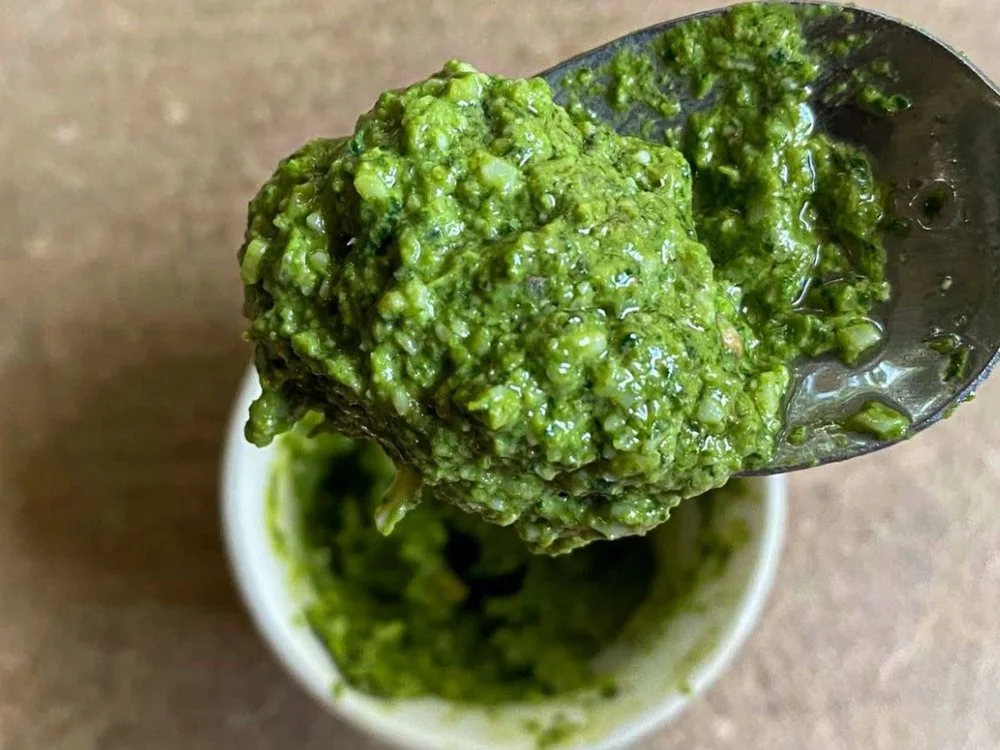
01 / READ THE SIGNS
Start with what you can observe.
Look for the pattern that matches your result before changing the recipe.
- Top darkens first: air exposure is a likely contributor.
- Pesto warms in the blender: long processing may affect color and aroma.
- Slime, mold or unsafe storage: do not attempt a color repair.
02 / RIGHT NOW
Can you save this batch?
You cannot reliably turn browned pesto bright green again. If it has been handled safely and is still sound, use it in a cooked dish where color matters less. Do not hide spoilage with fresh herbs or lemon.
03 / THE NEXT ATTEMPT
Make the change that matters.
- Dry washed herbs well and process in brief pulses.
- Transfer promptly to a small container with little headspace.
- Refrigerate promptly and freeze portions for longer keeping; an oil layer is not a substitute for refrigeration.
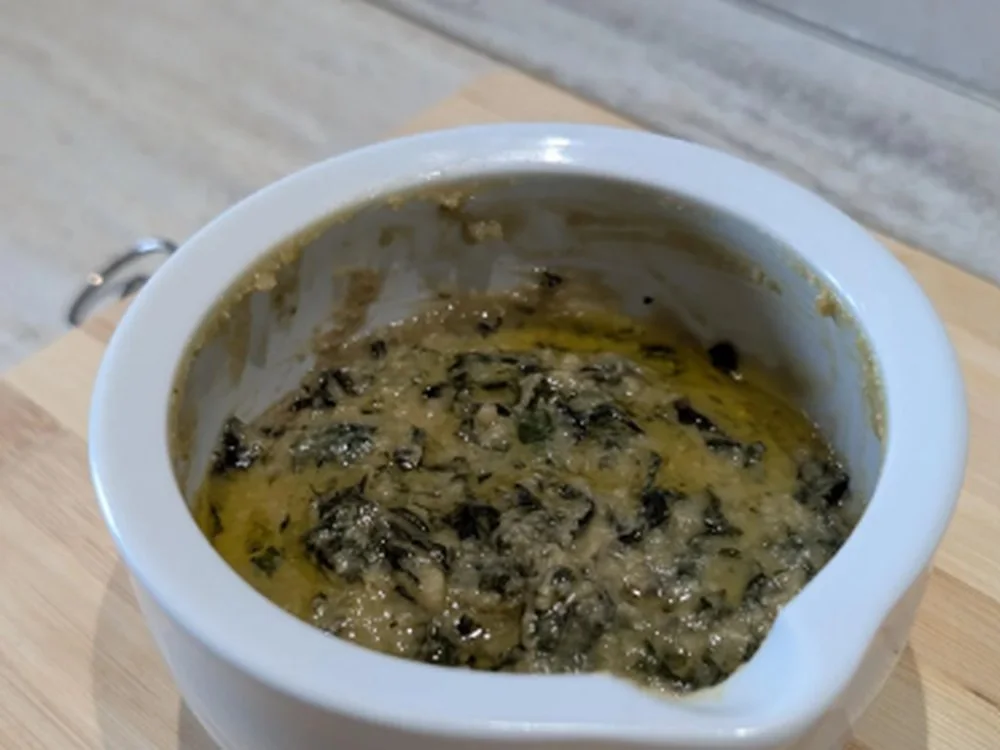
04 / A LITTLE UNDERSTANDING
What's happening underneath.
Cutting herbs exposes plant components to oxygen, and processing can warm them. Blanching can preserve color but changes fresh flavor. Acid may affect browning reactions while also changing green pigments, so lemon is a taste choice with tradeoffs.
Do not store homemade garlic-and-herb mixtures in oil at room temperature.
05 / ONE GOOD QUESTION
Should I blanch the basil?
It is an option when color matters, but it changes flavor and requires thorough cooling and drying. Choose according to how you will use the pesto.
06 / KEEP READING
References & related reading
Continue with these external resources on the relevant technique or safety guidance. They are independent of Rosu.
A note for your next attempt.
Record one change and what happened. Notes stay in this browser; they are not sent to Rosu.
Found something that needs a closer look? Send a correction. Read our editorial approach and food safety essentials.
FOLLOW THE THREAD
A little more useful reading.

Why Fresh Herbs Wilt or Turn Slimy Fast in the Fridge
Distinguish wilting from spoilage. Limp leaves may recover; slimy or moldy herbs should be discarded.
Read the guideWhy Produce Spoils Faster Than Expected
Sort produce by its condition and storage needs instead of putting every item in the same drawer.
Read the guide
Why Vinaigrette Separates Right After Shaking
Separation is normal in a simple oil-and-vinegar dressing. Shake again unless you need a longer-lasting emulsion.
Read the guide