Bread & dough / GUIDE 06
Why Bread Deflates the Moment It Leaves the Oven
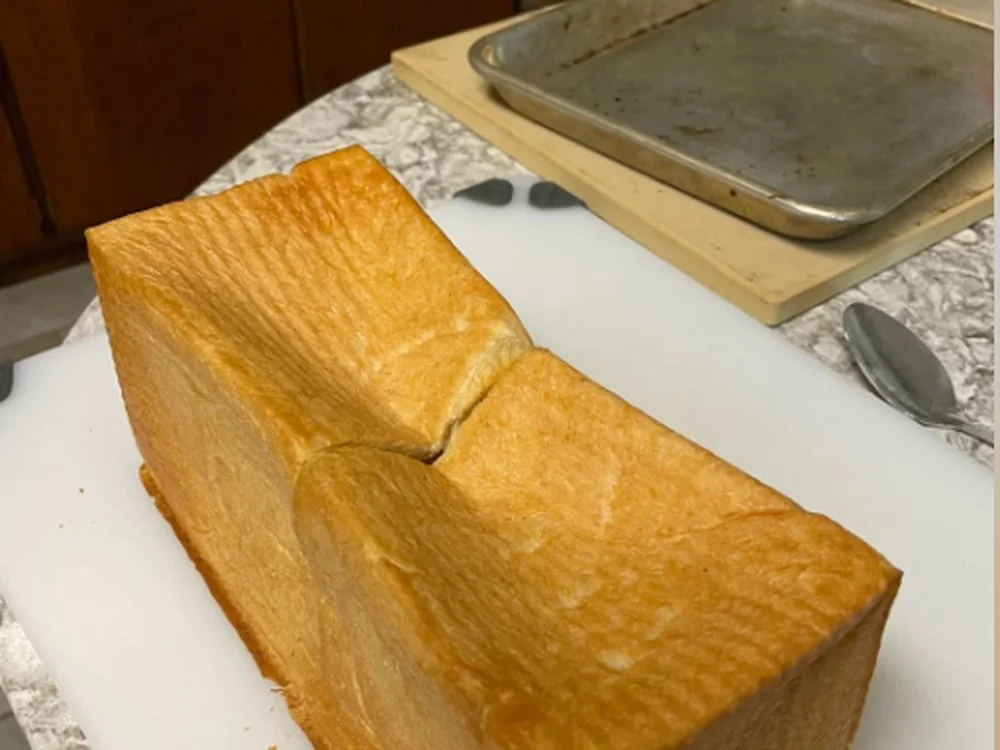
Collapse usually means the loaf's structure could not support itself. Check proofing and baking separately.

01 / READ THE SIGNS
Start with what you can observe.
Look for the pattern that matches your result before changing the recipe.
- Weak dough that sagged before baking: consider excessive proofing.
- A wet, compressed band after cooling: investigate underbaking.
- Only the sides wrinkle slightly: some contraction is normal in soft enriched loaves.
02 / RIGHT NOW
Can you save this batch?
If an underbaked loaf has just come out, returning it promptly to the oven may finish the interior, although the lost volume may not return. A cooled, fully baked collapsed loaf can become toast. Do not judge it by tapping the base alone.
03 / THE NEXT ATTEMPT
Make the change that matters.
- Observe the final proof instead of letting a timer override visibly fragile dough.
- Use the recipe's doneness checks and a thermometer where appropriate.
- Remove the loaf from its pan as directed and cool on a rack so steam can escape.
04 / A LITTLE UNDERSTANDING
What's happening underneath.
During baking, starch and proteins set around expanding gas cells. If that framework is insufficiently set or has been weakened by excessive fermentation, it contracts when pressure falls during cooling.
Leaving every loaf in a switched-off oven is not a general fix for collapse.
05 / ONE GOOD QUESTION
Can I reshape overproofed dough?
Some yeast doughs tolerate gentle degassing and another proof, but results depend on the formula and how far fermentation has progressed. It is not possible after baking.
06 / KEEP READING
References & related reading
Continue with these external resources on the relevant technique or safety guidance. They are independent of Rosu.
A note for your next attempt.
Record one change and what happened. Notes stay in this browser; they are not sent to Rosu.
Found something that needs a closer look? Send a correction. Read our editorial approach and food safety essentials.
FOLLOW THE THREAD
A little more useful reading.
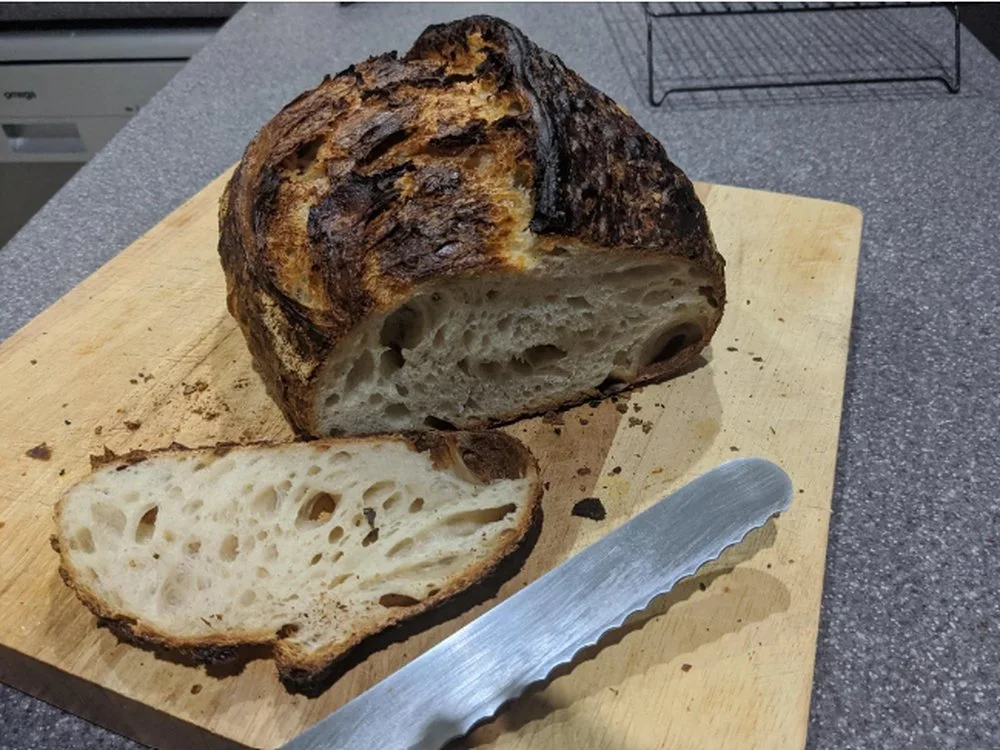
Why the Crust Burns While the Inside Stays Raw
Protect a darkening crust and give the center time to finish; increasing the heat makes the mismatch worse.
Read the guide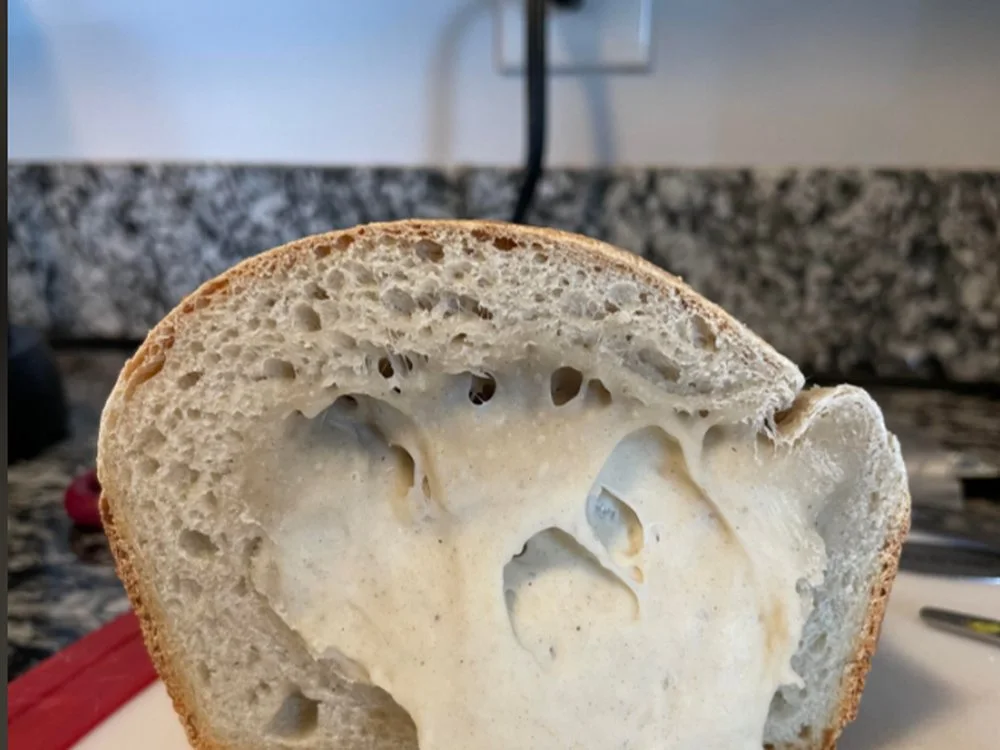
Why Your Bread Has Huge, Uneven Holes
A few large holes may be normal. A tunnel under the crust or dense dough around a cavity tells a different story.
Read the guide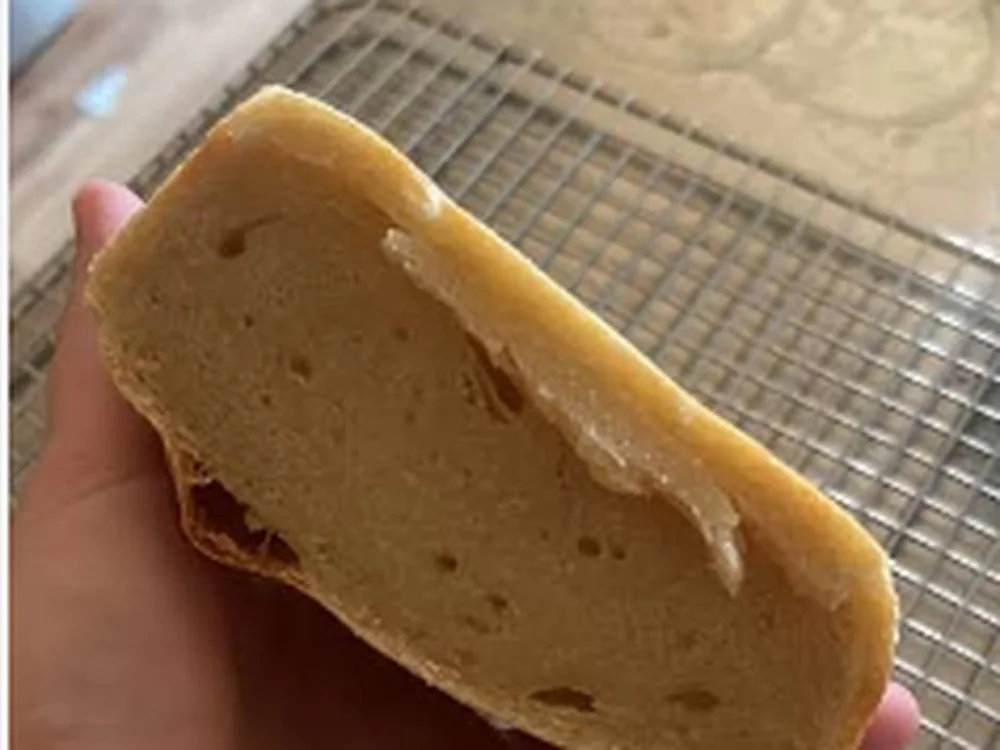
Why the Bottom of Your Bread Is Pale or Soggy
Work out whether the base never baked properly or became damp during cooling.
Read the guide