Bread & dough / GUIDE 04
Why Your Bread Has Huge, Uneven Holes
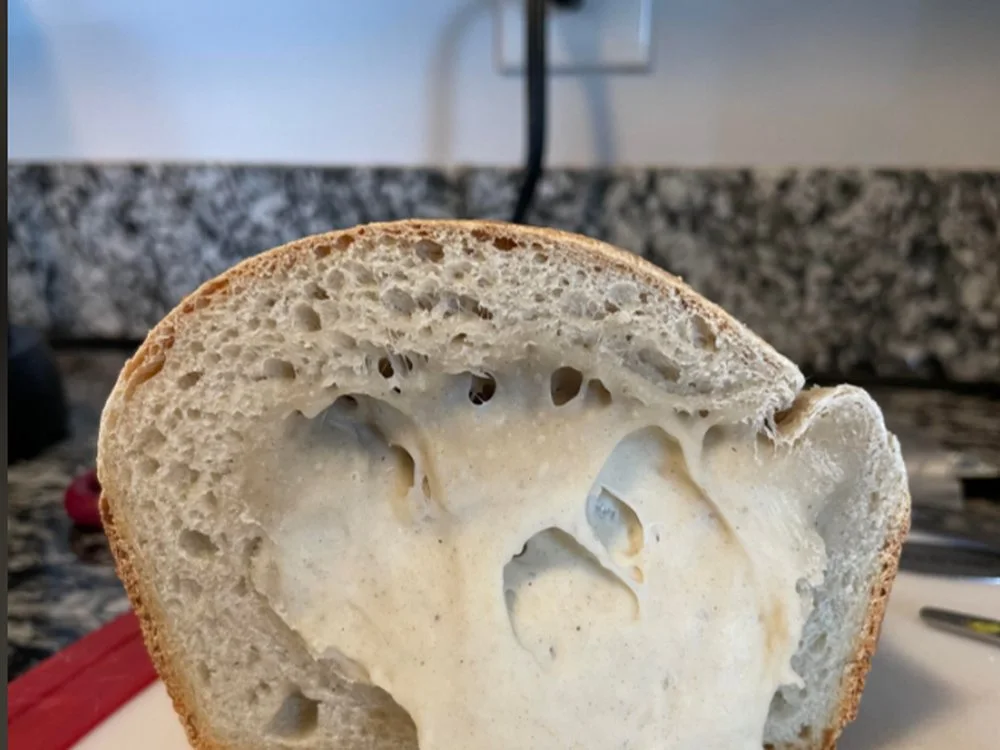
A few large holes may be normal. A tunnel under the crust or dense dough around a cavity tells a different story.
01 / READ THE SIGNS
Start with what you can observe.
Look for the pattern that matches your result before changing the recipe.
- An open crumb throughout: this may be the intended style.
- One long cavity near a fold: flour or trapped air may have prevented layers from joining.
- Large holes surrounded by dense crumb: underfermentation is one possible cause.
02 / RIGHT NOW
Can you save this batch?
The baked structure cannot be redistributed. Use slices with holes for toast or tear the loaf into pieces for soup. For the next batch, photograph the cut face and note whether cavities follow a shaping seam; that is more useful than simply shortening every rise.
03 / THE NEXT ATTEMPT
Make the change that matters.
- Let bulk fermentation reach the recipe's stated cues before shaping.
- For a fine sandwich crumb, gently redistribute large bubbles and shape with even tension.
- Brush away excess flour on surfaces that need to seal together.
04 / A LITTLE UNDERSTANDING
What's happening underneath.
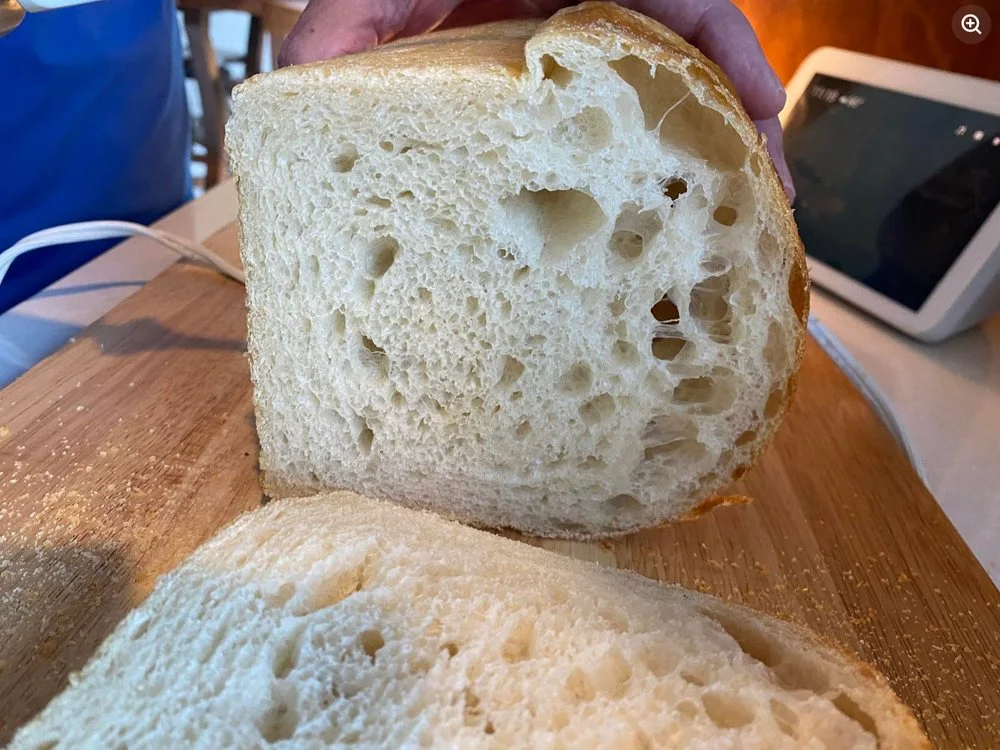
Gas cells grow during fermentation and baking. Their size depends on fermentation, hydration and handling. Aggressive degassing suits some fine-crumb loaves but would destroy the openness deliberately sought in others.
Do not assume large holes always mean overproofing.
05 / ONE GOOD QUESTION
Should I punch down sourdough?
Use the handling appropriate to the loaf. Gentle shaping often suits open-crumb sourdough; a sandwich loaf may need more deliberate redistribution of gas.
06 / KEEP READING
References & related reading
Continue with these external resources on the relevant technique or safety guidance. They are independent of Rosu.
A note for your next attempt.
Record one change and what happened. Notes stay in this browser; they are not sent to Rosu.
Found something that needs a closer look? Send a correction. Read our editorial approach and food safety essentials.
FOLLOW THE THREAD
A little more useful reading.
Why Your Bread Comes Out Dense Instead of Airy
A tight crumb starts before the oven. Check fermentation and dough strength before adding more yeast.
Read the guide
Why Bread Deflates the Moment It Leaves the Oven
Collapse usually means the loaf's structure could not support itself. Check proofing and baking separately.
Read the guide
Why Pizza Dough Tears Instead of Stretching
If dough springs back, rest it. If it tears without resistance, investigate strength and fermentation.
Read the guide