Sauces & flavor / GUIDE 43
Why Pan Sauce Won't Deglaze Properly
Add enough liquid to cover the browned deposits and let it simmer. Black burned residue should not become sauce.

01 / READ THE SIGNS
Start with what you can observe.
Look for the pattern that matches your result before changing the recipe.
- Golden-brown deposits: these are useful fond.
- Black, acrid residue: discard it and clean the pan.
- Thick sticky patches: a little more liquid and time may be needed.
02 / RIGHT NOW
Can you save this batch?
Remove the food and excess fat, then add a suitable liquid carefully. Simmer while loosening the browned deposits with a wooden or silicone tool. A pan that cooled can be reheated with liquid; it does not have to be dangerously hot for deglazing to work.
03 / THE NEXT ATTEMPT
Make the change that matters.
- Control searing heat so drippings brown without burning.
- Use enough stock, water or other recipe liquid to wet the fond.
- Scrape gently across the base, then reduce to the desired flavor before finishing the sauce.
04 / A LITTLE UNDERSTANDING
What's happening underneath.
Deglazing dissolves and loosens flavorful browned material into liquid. Heat speeds the process, but a smoking pan is not required. Burned deposits add bitterness rather than the savory flavor of a well-browned fond.
Take the pan off an open flame before adding alcohol, and follow the recipe's precautions.
05 / ONE GOOD QUESTION
Can I use water instead of wine?
Yes, in many pan sauces. Water releases the fond, while stock or wine contributes additional flavor. Adjust the finishing seasoning accordingly.
06 / KEEP READING
References & related reading
Continue with these external resources on the relevant technique or safety guidance. They are independent of Rosu.
A note for your next attempt.
Record one change and what happened. Notes stay in this browser; they are not sent to Rosu.
Found something that needs a closer look? Send a correction. Read our editorial approach and food safety essentials.
FOLLOW THE THREAD
A little more useful reading.
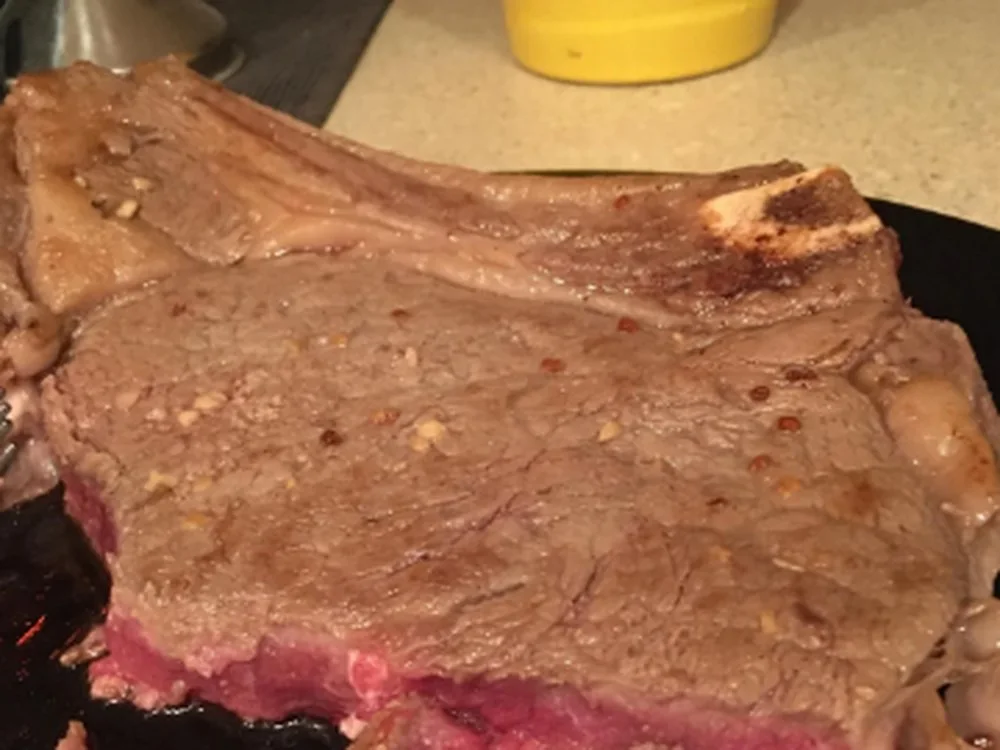
Why Seared Meat Turns Gray Instead of Crisp and Brown
Dry the surface and give the pan space. A pool of liquid prevents an effective sear.
Read the guide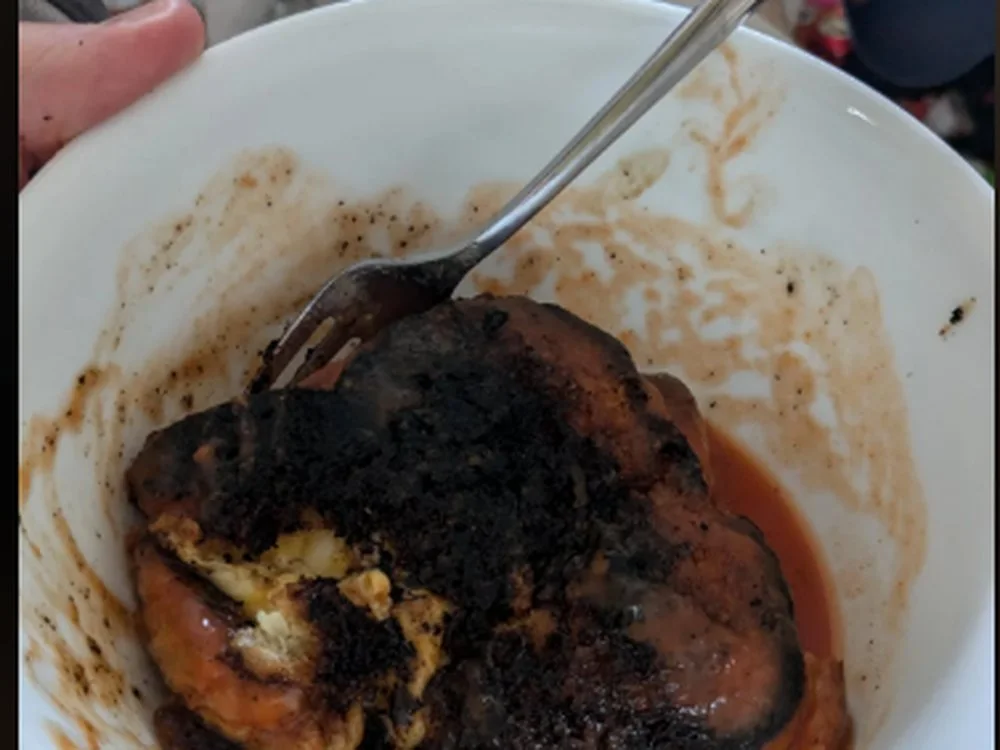
Why Sauce Burns on the Bottom Even With Constant Stirring
Stop stirring as soon as you suspect scorching. Transfer the unburned sauce without scraping the bottom.
Read the guide
Why Food Sticks to Stainless Steel Pans
Use controlled preheating, enough fat and patience. Stainless steel is not a nonstick surface.
Read the guide