Cakes & pastry / GUIDE 07
Why Your Cake Sinks in the Middle
A sunken middle is a structural clue. Check whether the center finished baking before blaming the oven door.
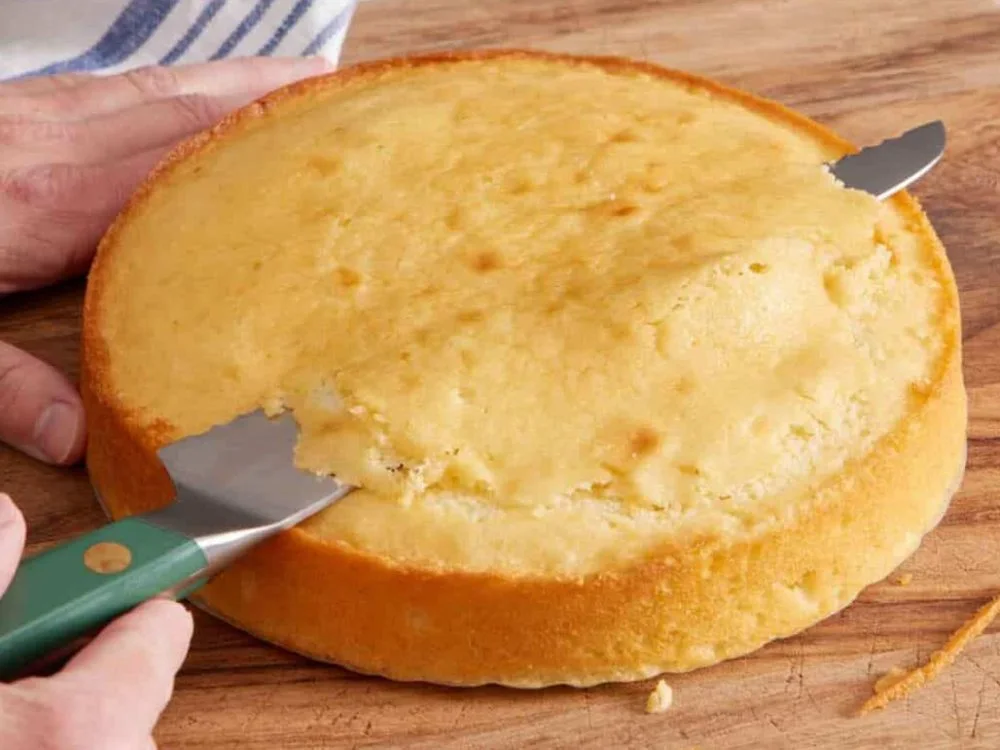
01 / READ THE SIGNS
Start with what you can observe.
Look for the pattern that matches your result before changing the recipe.
- Wet batter at the center: baking was incomplete.
- A dramatic rise followed by collapse: verify leavener quantity and pan size.
- A slight dip in a flourless cake: this may be normal for the recipe.
02 / RIGHT NOW
Can you save this batch?
If the cake is still in the oven, continue until its recipe-specific doneness cues are met. A cooled sunken cake will not rise again. If fully cooked, level it or turn it into a layered dessert; do not serve raw batter as a deliberately gooey center.
03 / THE NEXT ATTEMPT
Make the change that matters.
- Use the specified pan dimensions and measure leavener carefully.
- Avoid unnecessary door opening while the structure is still setting.
- Check the center rather than relying on browned edges; follow the recipe's skewer, spring-back or temperature guidance.
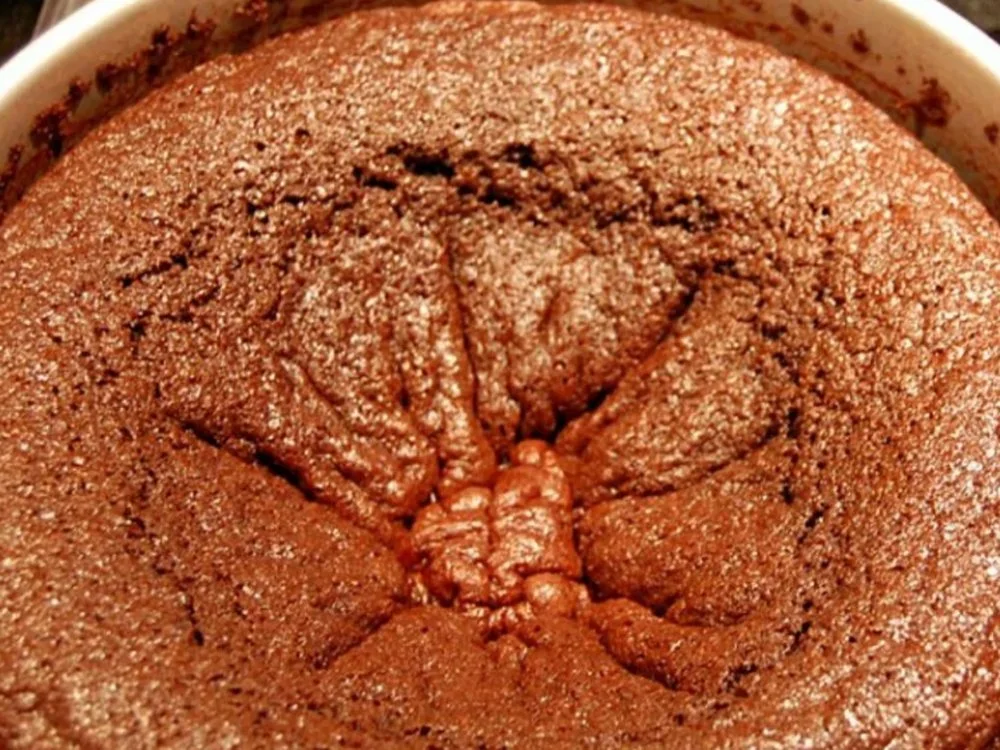
04 / A LITTLE UNDERSTANDING
What's happening underneath.
Air, steam and leavening gases expand before the cake's structure becomes firm. Excess expansion or insufficient setting leaves the center unsupported. A door opening can disturb conditions, but it is not the only explanation.
Do not add extra baking powder as insurance against a heavy cake.
05 / ONE GOOD QUESTION
Can frosting hide the dip?
Yes, if the cake is fully cooked and tastes good. Decoration solves appearance, not rawness or a failed structure.
06 / KEEP READING
References & related reading
Continue with these external resources on the relevant technique or safety guidance. They are independent of Rosu.
A note for your next attempt.
Record one change and what happened. Notes stay in this browser; they are not sent to Rosu.
Found something that needs a closer look? Send a correction. Read our editorial approach and food safety essentials.
FOLLOW THE THREAD
A little more useful reading.
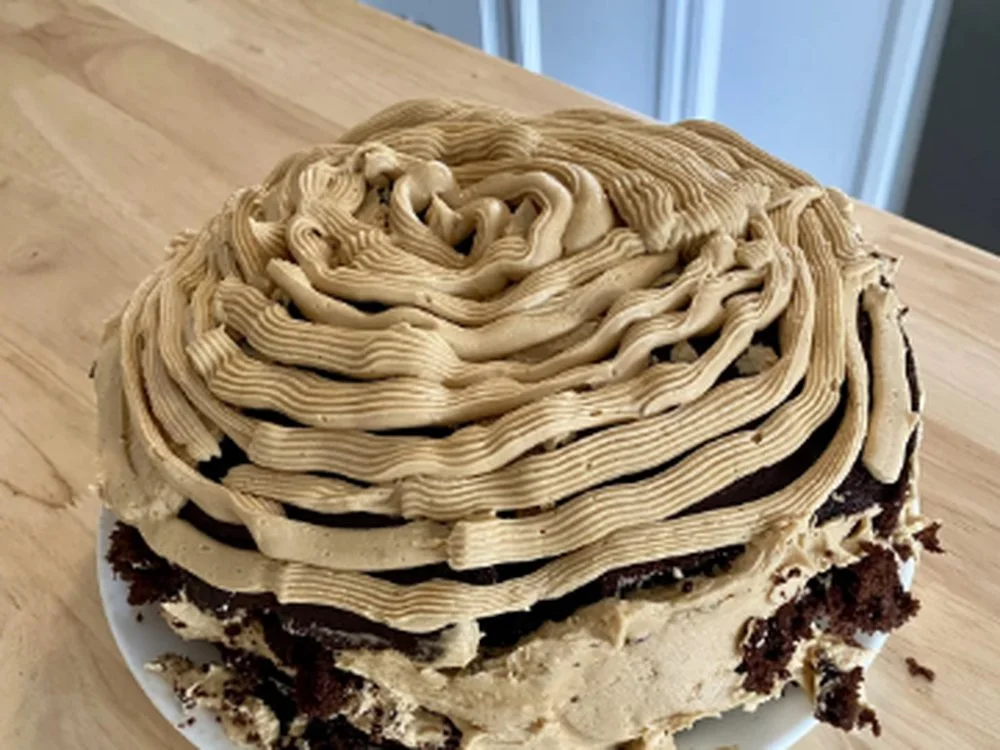
Why Your Cake Is Dry Even Though You Followed the Timing
Timing is a checkpoint, not a guarantee. Check flour weight, pan size and actual doneness.
Read the guide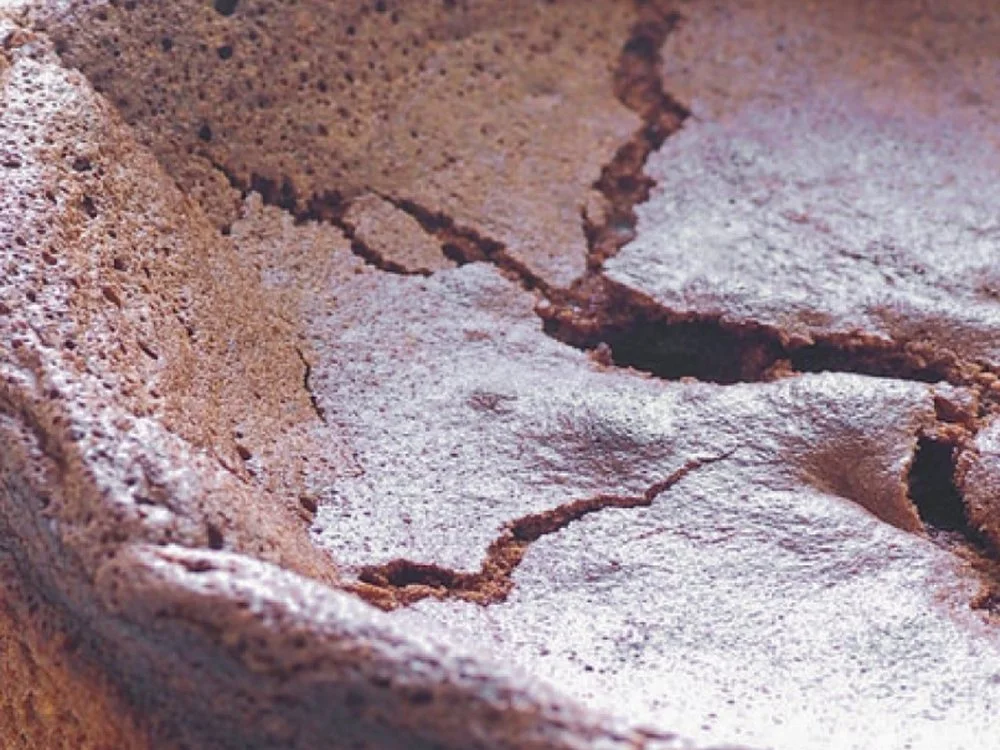
Why Cake Layers Dome Unevenly on Top
A centered dome and a lopsided cake are different problems. Check the pan's level before changing the recipe.
Read the guide
Why the Same Recipe Gives Different Results in Your Kitchen vs. Online
Compare the conditions, not just the ingredient list. Pan depth and flour type can change a recipe substantially.
Read the guide