Meat & fish / GUIDE 50
Why Steak Is Chewy Even Though You Rested It
Find the grain before slicing. Resting cannot shorten long muscle fibers or undo overcooking.
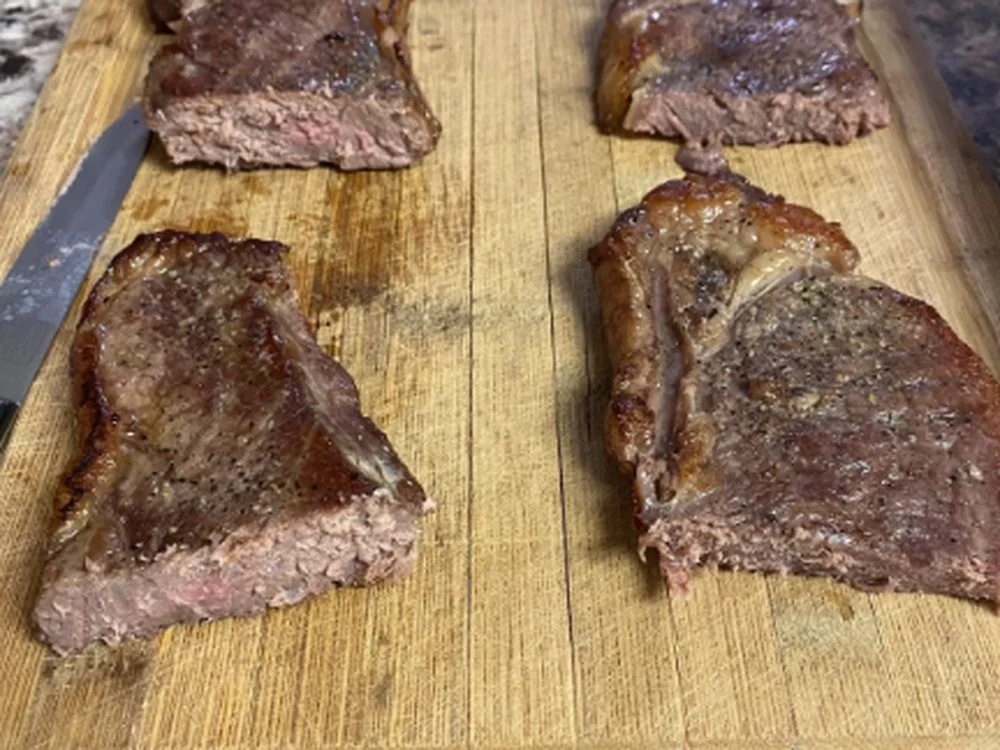
01 / READ THE SIGNS
Start with what you can observe.
Look for the pattern that matches your result before changing the recipe.
- Long fibers run along each slice: cut across them instead.
- Dry, firm meat throughout: it may be overcooked.
- A braising cut was cooked like a tender steak: the method may not suit it.
02 / RIGHT NOW
Can you save this batch?
Slice cooked steak thinly across the grain, using an angle if helpful. Serve with a sauce or in a dish that suits smaller pieces. A dry steak cannot become juicy again, and cooking a tender steak longer will not usually make it softer.
03 / THE NEXT ATTEMPT
Make the change that matters.
- Identify the cut and grain direction before cooking.
- Use the safe endpoint appropriate to the meat and preparation.
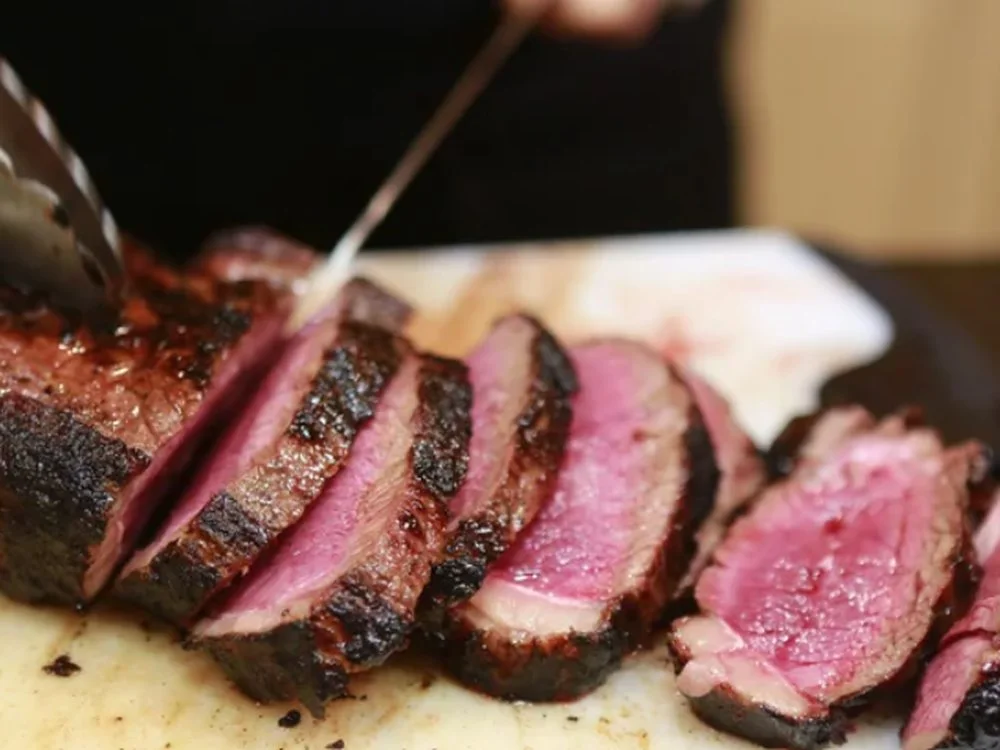
- Rest as appropriate, then cut perpendicular to the visible fibers rather than parallel to them.
04 / A LITTLE UNDERSTANDING
What's happening underneath.
Chewing is easier when fibers are shortened by slicing. Cut selection and internal cooking also affect tenderness. Flank and skirt can work with quick cooking and thin cross-grain slicing; they do not need to be treated exactly like a shoulder braise.
Do not describe all chewiness as undercooking.
05 / ONE GOOD QUESTION
What if the grain changes direction?
Divide the steak into sections and rotate each before slicing. A single cutting direction may not suit the entire piece.
06 / KEEP READING
References & related reading
Continue with these external resources on the relevant technique or safety guidance. They are independent of Rosu.
A note for your next attempt.
Record one change and what happened. Notes stay in this browser; they are not sent to Rosu.
Found something that needs a closer look? Send a correction. Read our editorial approach and food safety essentials.
FOLLOW THE THREAD
A little more useful reading.
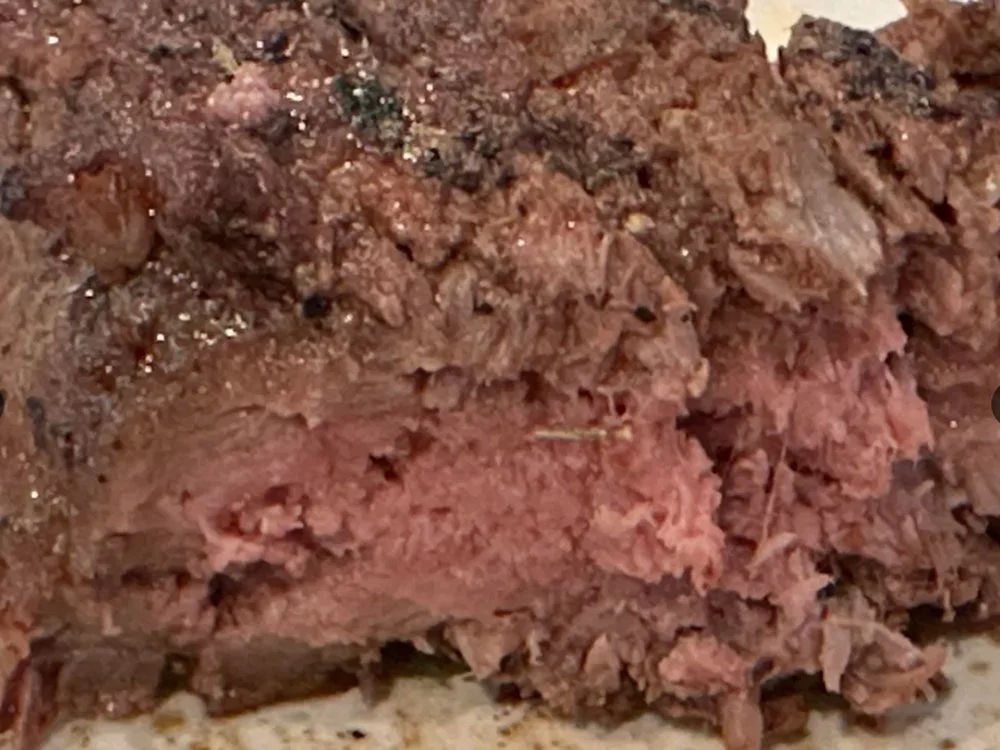
Why Your Meat Stays Tough Even After Hours of Cooking
Identify the cut first. A tough braising cut may need time; a dry lean cut will not improve with hours more cooking.
Read the guide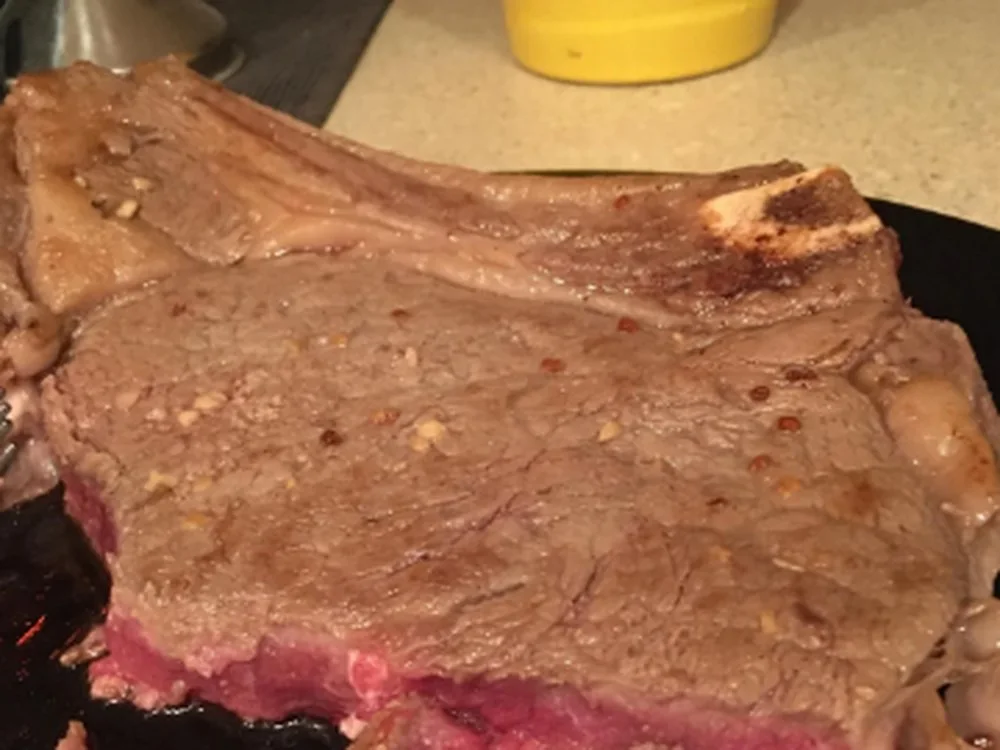
Why Seared Meat Turns Gray Instead of Crisp and Brown
Dry the surface and give the pan space. A pool of liquid prevents an effective sear.
Read the guide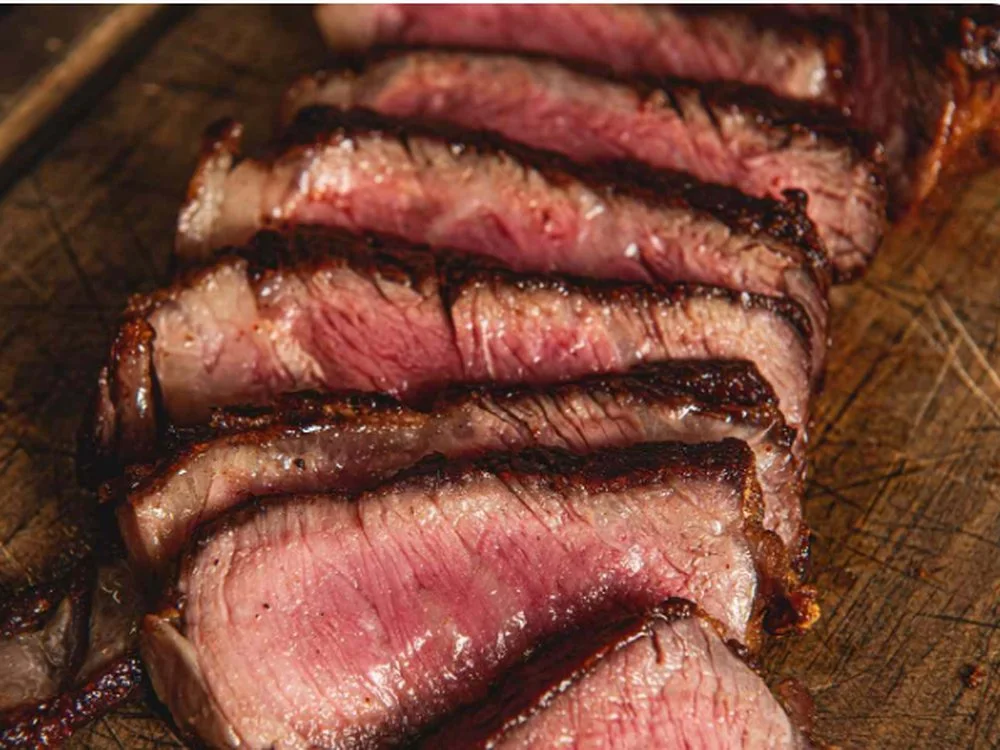
Why Resting Time Matters Before Slicing or Serving
Resting serves different purposes in meat, bread and cake. Use the timing appropriate to the food.
Read the guide